


Louis Vuitton is easily one of the most recognizable luxury handbag brands in the world. Their classic designs and signature “LV” monogram are instantly familiar to almost everyone, and they’ve become a true status symbol over the years.
With so many people knowing what these bags look like, you’d think it would be easy to spot fake bags! Unfortunately, it’s not always that simple.
Because Louis Vuitton bags are so iconic, expensive, and highly sought after, the market has been flooded with replicas and dupes. And since these bags have been around for so long, counterfeiters have only gotten better at making fakes look convincing. On top of that, online shopping and resale sites have made it even harder to tell what’s real and what’s not.
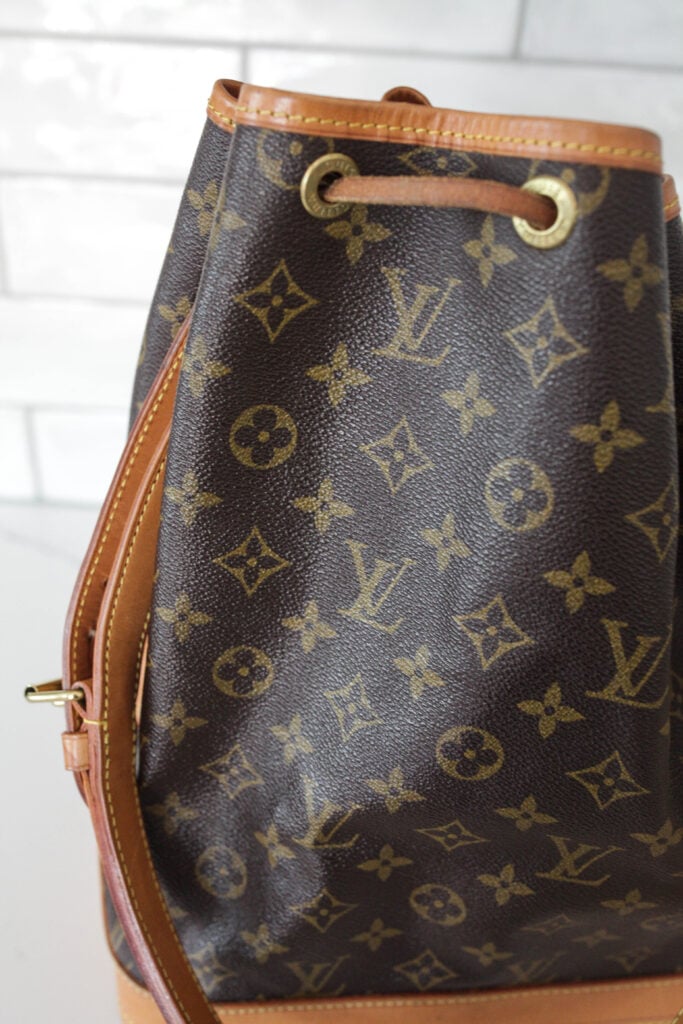
That’s exactly why knowing what to look for matters.
In this guide, I’m walking you through how to tell if a Louis Vuitton bag is real or fake, along with the key details to inspect step by step. Whether you already own a bag and want to verify it or you’re shopping secondhand and want to avoid getting a replica, these are the biggest signs to watch for.
Why Louis Vuitton Is So Heavily Counterfeited
Because Louis Vuitton bags are so iconic and come with a high price tag, they’ve long been a major target for counterfeiters. And today’s fakes aren’t always easy to spot. As counterfeit quality has improved over the years, a quick glance usually isn’t enough to determine authenticity. That’s why it’s important to take a more systematic approach and carefully inspect key details before deciding whether a Louis Vuitton bag is real or fake.
Key Differences to Look For
This post contains affiliate links.
When trying to determine whether a Louis Vuitton bag is real or fake, it’s important to understand that no single detail can confirm authenticity on its own. Instead, you’ll want to look at several features and evaluate the bag as a whole. Each element can provide helpful clues, but true bag authentication comes from examining multiple details together.
Below, we’ll walk through some of the most reliable areas to inspect and exactly what to look for when evaluating a bag. These checkpoints will help you feel more confident identifying signs of an authentic Louis Vuitton versus a counterfeit.
1. Monogram and Canvas
One of the first things to look at when evaluating a Louis Vuitton bag is the monogram canvas. This is one of the brand’s most recognizable features, and it’s also an area where many counterfeits fall short once you start paying close attention to the details.
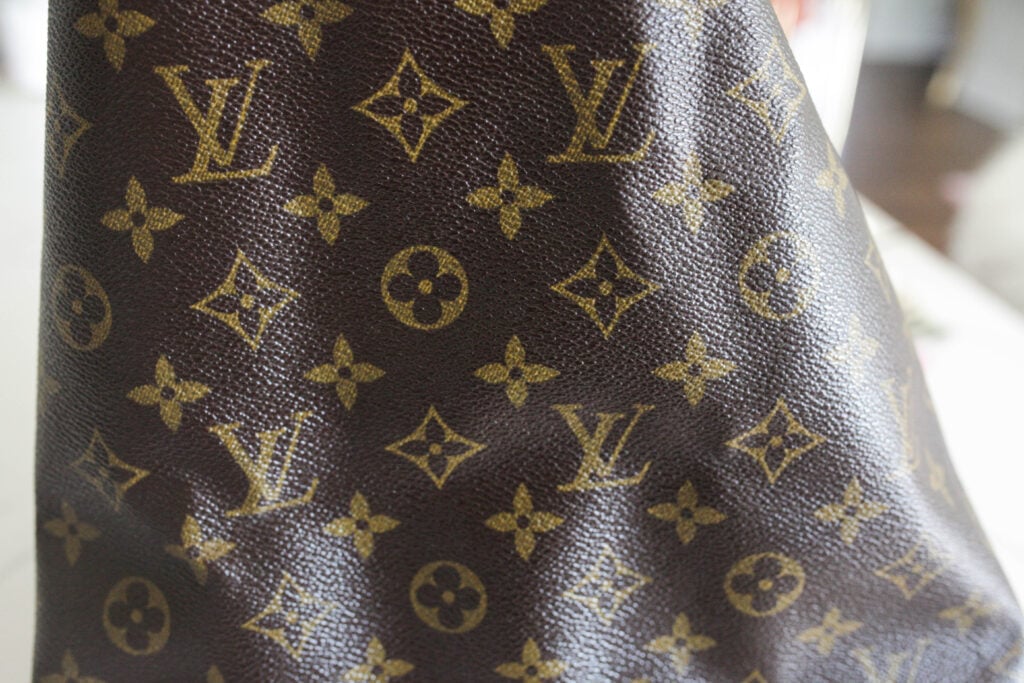
Authentic Louis Vuitton Monogram
On an authentic bag, the monogram layout is intentional and consistent. The pattern should appear balanced and symmetrical, especially on the front panel. In most classic styles, the “LV” logo is not cut off mid-letter on the main front panel, and the spacing between symbols tends to follow a very specific and repeatable pattern. You’ll also notice that the canvas color looks rich and even, with consistent brown tones and clear, crisp printing throughout.
Fake Louis Vuitton Monogram
On counterfeit bags, the monogram pattern often looks slightly “off” once you really study it. You might notice crooked alignment, uneven spacing, or a pattern that seems to drift across seams. The brown tones can vary from panel to panel, and the printed symbols may look fuzzy or have slightly bleeding edges. This can happen because counterfeiters frequently print canvas panels separately or use lower-quality materials and cutting templates, which makes it harder to achieve the same level of precision as an authentic Louis Vuitton bag.
2. Stitching and Construction
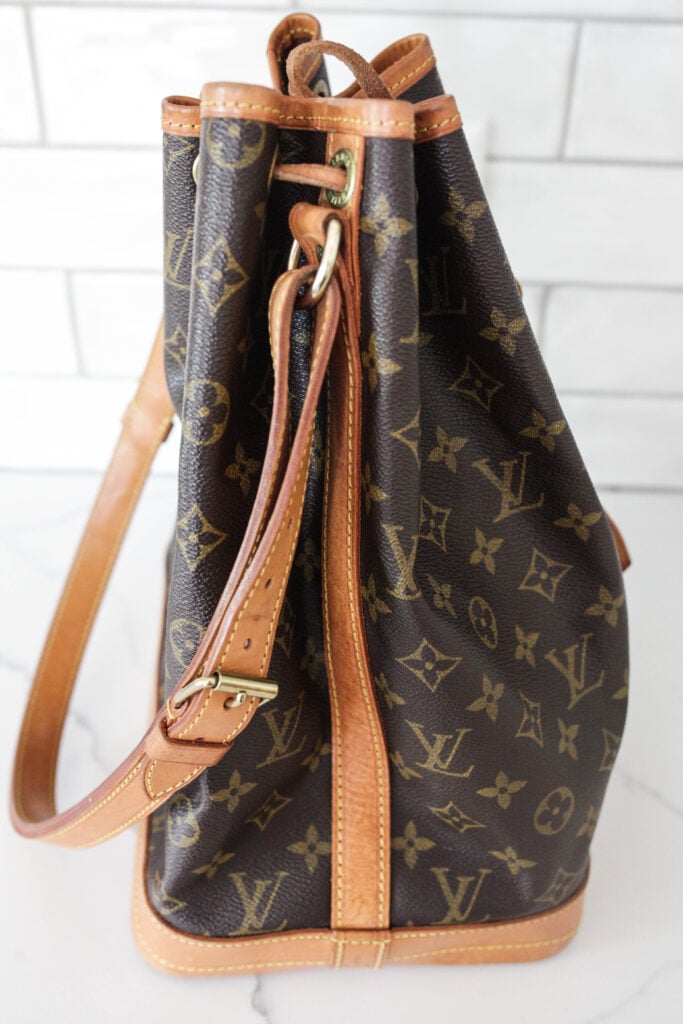
Stitching is often one of the biggest clues when trying to determine whether a Louis Vuitton bag is authentic. The brand is known for extremely precise construction, and even small inconsistencies can be a red flag.
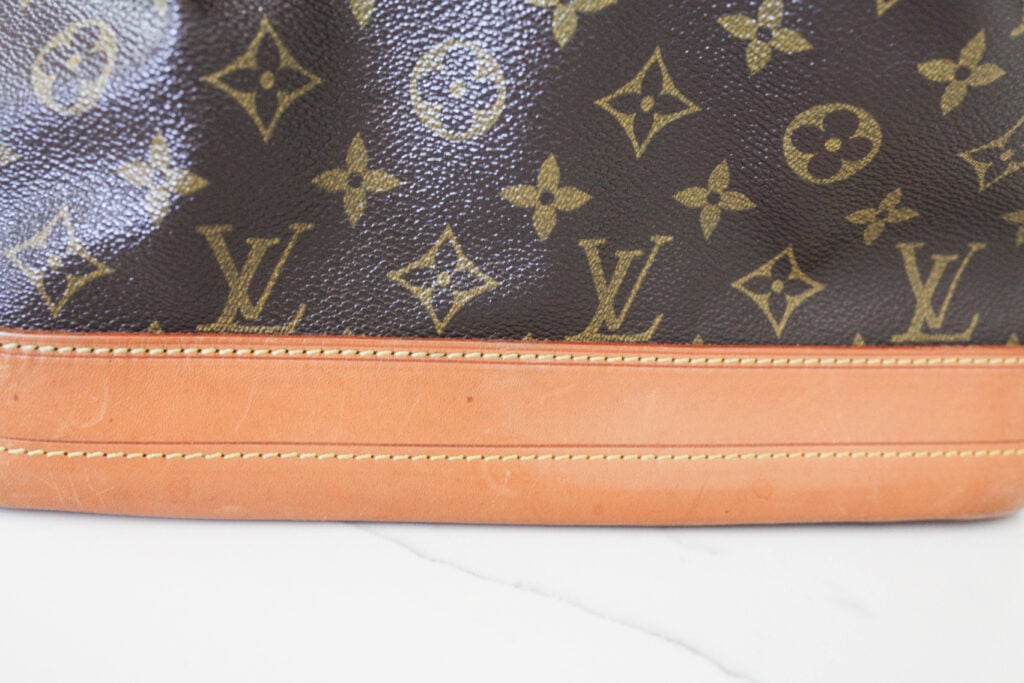
Authentic Louis Vuitton Stitching
On a real Louis Vuitton bag, the stitching should look clean, even, and almost perfectly uniform. You shouldn’t see loose threads, uneven spacing, or areas where the stitching tension looks inconsistent. One detail many people don’t realize is that Louis Vuitton is very intentional about stitch count. For example, the number of stitches along one handle panel should match the other side, showing a clear level of symmetry and attention to detail.
The thread color is another subtle indicator. Authentic bags typically feature a muted mustard-yellow thread (and occasionally a deeper brown), rather than a bright or overly bold yellow tone.
Fake Louis Vuitton Stitching
On counterfeit bags, stitching often looks rushed once you examine it closely. You may notice slightly crooked lines, uneven spacing between stitches, or areas where the thread appears tighter in some spots and looser in others. This usually happens because counterfeit production is focused on speed and cost savings, which can lead to inconsistent tension and less precise construction overall.
If the thread color looks overly bright or the stitch count differs from one side of the bag to the other, those can both be signs that the bag may not be authentic.
3. Heat Stamp and Front
The heat stamp is one of the most important details to examine when trying to determine whether a Louis Vuitton bag is authentic. This stamp is essentially the brand’s signature mark, and professional authenticators often rely heavily on the lettering, font style, and overall embossing quality when evaluating a bag.
You’ll typically find the heat stamp either on the inside of the bag or a part of exterior leather trim or strap. On newer styles, it may appear on a leather or fabric tag inside, while older bags sometimes have the stamp directly on the lining or on an interior pocket.
Authentic Louis Vuitton Heat Stamp
On a real Louis Vuitton bag, the lettering should look very clean, crisp, and relatively thin. The font has specific characteristics that are surprisingly consistent across styles. For example, the tail on the “L” is typically very short, and the “O” letters appear round and slightly larger in proportion.
Another subtle detail is the spacing between the two “T” letters in “VUITTON,” which is usually very tight, sometimes almost appearing as though the letters are touching.
The embossing itself should look even and intentional. A genuine stamp will appear clearly defined and properly pressed into the leather without looking messy or overly dramatic.

Fake Louis Vuitton Heat Stamp
On counterfeit bags, the font often looks slightly heavier or thicker than it should. You may notice uneven spacing between letters, misalignment, or subtle differences in shape that make the overall stamp look “off.” The embossing can also be a giveaway. Some fake bags have a stamp that looks too shallow and faint, while others are pressed so deeply that the leather looks distorted or shows uneven pressure marks.
If the lettering lacks sharpness, looks inconsistent, or doesn’t follow the typical Louis Vuitton font characteristics, it can be a strong sign that the bag may not be authentic.
4. Date Code, RFID, and Made In Stamping
Louis Vuitton bags don’t come with traditional serial numbers. Instead, most styles produced over the years include what’s known as a date code, which provides insight into when and where the bag was made. While this code can be a helpful piece of the authenticity puzzle, it’s important to remember that a date code alone does not confirm whether a bag is real or fake.
In general, bags made prior to the early 1980s did not include date codes. However, most bags you’ll come across on the resale market today should have one — unless they were produced more recently. In March 2021, Louis Vuitton began phasing out date codes and replacing them with a hidden RFID microchip, which can be scanned by the brand or professional authenticators.
On bags that do have date codes, they’re intentionally placed in discreet locations so they don’t interfere with the overall design. You may find the code on a leather tab along the inner lining seam, inside a pocket lining, heat stamped on interior leather trim, under a flap pocket, or along the top seam of an interior pocket.
1990–2006 date codes
Bags from this era typically feature two letters followed by four numbers. The letters indicate the factory location, while the numbers reflect the month and year the bag was made. The first and third digits represent the month, and the second and fourth digits represent the year.
2007–2020 date codes
During this period, Louis Vuitton continued using two letters followed by four numbers, but the meaning shifted slightly. The letters still indicate the factory location, while the numbers represent the week and year of production. The first and third digits show the production week, and the second and fourth digits indicate the year.
Post-2021 RFID microchips
Beginning in 2021, Louis Vuitton gradually replaced traditional date codes with embedded RFID microchips. These chips are hidden within the bag and are not visible to the eye. Because of this transition, the absence of a date code on newer styles doesn’t automatically mean the bag is fake.
No matter the production era, the date code should make logical sense and align with other details on the bag. For example, the factory location indicated by the letters should match the “Made in” stamping found elsewhere on the bag. If the code appears inconsistent, illogical, or doesn’t match the bag’s overall style and materials, it can be a sign that further inspection is needed.
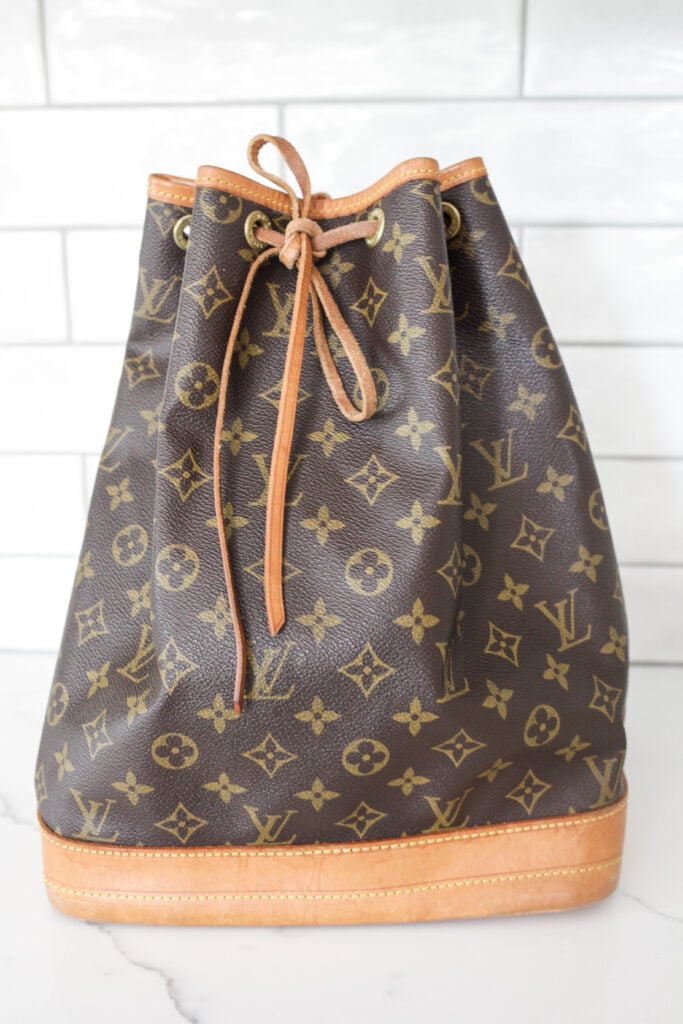
5. Hardware, Zippers, and Leather Aging
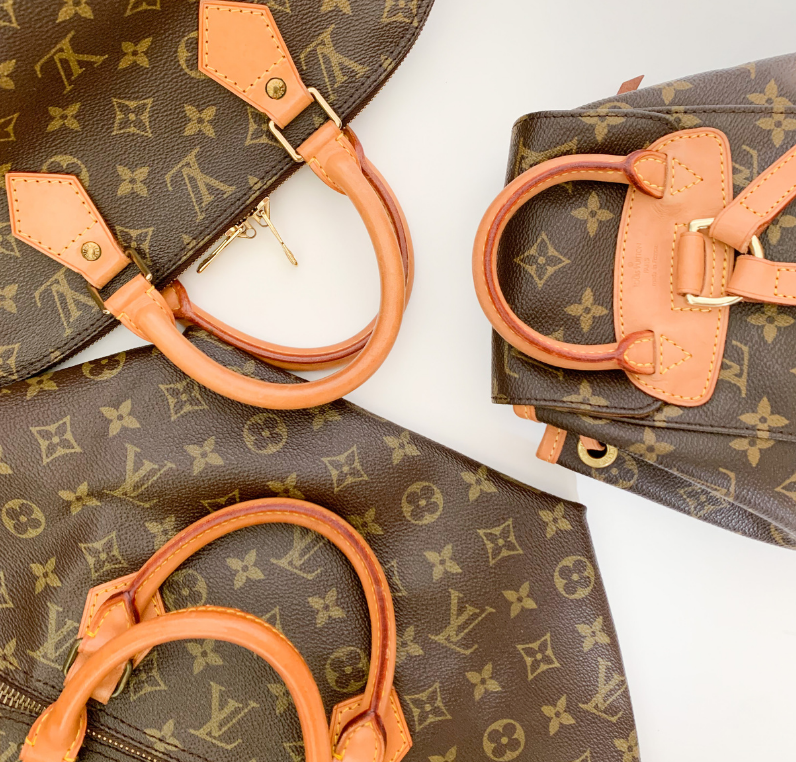
The handles, hardware, and zipper details on a Louis Vuitton bag are often overlooked, but they can be some of the clearest indicators of whether a bag is authentic or counterfeit. Paying attention to both how these features look and how they feel can make a big difference when evaluating a bag.
Authentic Louis Vuitton hardware, zippers, and leather
Start with the handles. On a real Louis Vuitton bag, the handles should feel soft and smooth to the touch. Over time, the leather naturally oxidizes and darkens with use and exposure. Many handles are also finished with a contrasting burgundy edge that will deepen in color as the bag ages.
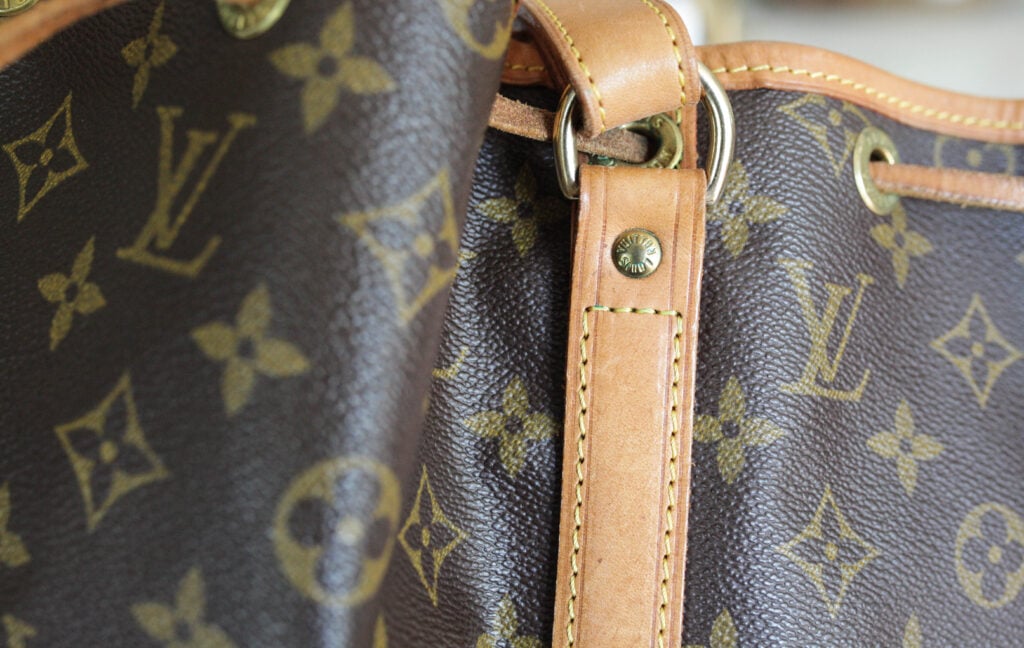
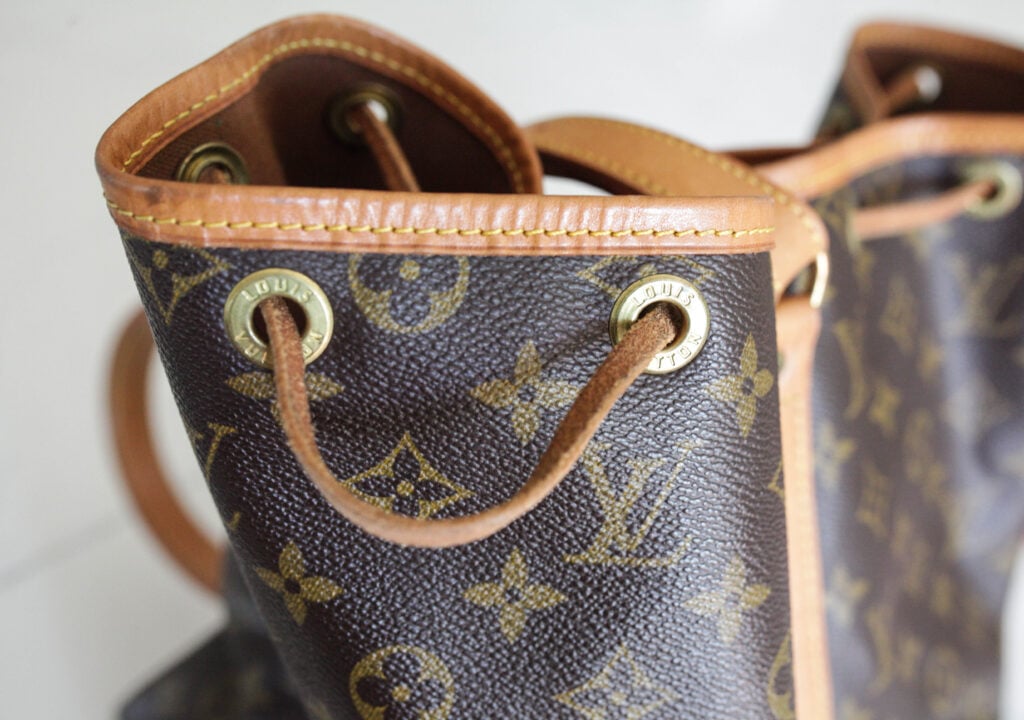
Hardware on authentic bags should feel solid and substantial. Louis Vuitton commonly uses high-quality solid brass that is durable and evenly colored rather than overly shiny. Larger hardware pieces, such as clasps or closures, should feature the signature monogram that is crisply etched, centered, and evenly placed. Even the rivets typically include the full “Louis Vuitton” logo, and they should match each other throughout the bag.
Zippers are another important detail. The zipper pull should feature the Louis Vuitton name or monogram clearly and precisely. When tested, the zipper should glide open and closed smoothly and be cleanly sewn in without loose threads or uneven stitching.
Fake Louis Vuitton hardware, zippers, and leather
On counterfeit bags, the handles can feel stiff or plastic-like instead of soft and supple. The edge trim may appear bright red, heavily painted, or unnatural looking rather than gradually darkening over time.
Hardware is also a common giveaway. Fake bags often use lightweight materials or cheap gold plating that looks overly bright and less refined. Logos on clasps, zipper pulls, or rivets may appear off-center, poorly etched, or inconsistent from one piece of hardware to another.
Zippers on counterfeit bags can feel rough or difficult to move. If the zipper catches, sticks, or looks unevenly sewn into the bag, it can be a strong sign of lower-quality construction.
6. Interior Lining and Dust Bag Details
The interior lining of a Louis Vuitton bag can vary quite a bit depending on the style, which is why it’s important to compare the lining to the specific bag you’re evaluating. Unlike some luxury brands that use the same interior across most designs like Chanel, Louis Vuitton uses a range of materials such as micro monogram fabric, red or honey canvas, leather, or microfiber suede. Doing a bit of research on the exact model can help you confirm whether the interior matches what the authentic version should have.
Authentic Louis Vuitton Interior and Dust Bag
On a real Louis Vuitton bag, the interior lining will feel high quality and appropriate for that particular style. Materials like microfiber suede or coated canvas should feel durable and well-constructed rather than thin or flimsy. The interior stitching should also look neat and consistent, with no loose threads or uneven finishing.
Louis Vuitton dust bags are typically very simple in design. They are usually a soft tan or beige color and may come in either an envelope or drawstring style. The signature “LV” or “Louis Vuitton” logo should appear centered on the front. Authentic dust bags are generally made from soft cotton and often include a label noting production in Spain or India.
Fake Louis Vuitton Interior and Dust Bag
Counterfeit bags often cut corners when it comes to the interior because it’s less visible at first glance. You may notice generic brown suede lining, materials that feel thin or plastic-like, or messy interior stitching. Loose threads and uneven seams can also be warning signs.
Dust bags included with fake handbags may look similar at first, but the fabric can feel rough or synthetic, and the logo placement or printing quality may appear off.
When to Seek Professional Authentication
This tip is the simplest, and a bit ironic: if your bag comes with a Certificate of Authenticity, it’s not an authentic Louis Vuitton bag. Your bag may come with a cream-colored card listing the bag style and barcode, but never authenticity cards.
Scoring a genuine Louis Vuitton bag is something that many fashionistas dream about. But be sure to rely on your instincts.
At the end of the day, it’s always best to refer back to the age-old saying: if a deal seems too good to be true, it probably is. These bags are well-known, expensive, and prized by collectors, so it’s very unlikely someone would let go of a real Louis Vuitton item for a price that doesn’t make sense.
Otherwise, be sure to pay attention to these markers of quality above all else. Louis Vuitton’s $1,000+ price tags aren’t for nothing. The real bags are made using premium materials and craftsmanship, which has kept them so popular (and replicated) all these years.
FAQs
Louis Vuitton began replacing date codes with hidden RFID microchips in 2021, so newer bags may not have a visible code. If your bag seems older and you can’t locate one, it’s a good idea to have it professionally authenticated.
Louis Vuitton bags don’t have traditional serial numbers. Date codes can offer helpful clues, but they can’t confirm authenticity on their own.
No. Louis Vuitton does not issue certificates of authenticity. Authenticity is typically verified through purchase receipts or professional authentication services.
Hopefully, this guide will have you fully prepared to find and authenticate your brand new favorite handbag! Be sure to head to this post for some of the most popular LV bags, some of my favorite designer crossbody bags and backpacks or this one with 14 other luxury brands with beautiful designer bags!
I also have a few other blogs with tips on spotting fake Gucci bags and how to tell if gold is real to help you out!
I got a Louis Vuitton purse I got for a gift. I can’t find a code can you please show me if it’s real
It’s hard to help without examining the bag myself. You can bring it in to an authenticator or a resell boutique in your town to have someone look at it!